Showing posts with label J Gunnar Grey. Show all posts

Tuesday, August 21, 2012

What's New?


Captain Kelly Bonham, a NATO electronics intelligence officer and combat zone veteran, agreed to adopt a war dog, but when Pojo arrives he’s not at all what she expected. This German Shepherd isn’t interested in rolling over for a tummy rub; he’s a working dog, a retired bomb sniffer who saw his handler cut in half by an anti-personnel mine in Afghanistan. That’s serious trauma, and Bonnie wonders if his canine brain is still fully functional.

Now she’s shaking it down with a dog who has more teeth than the law allows. A dog whose behavior is puzzling, threatening, maybe even unhinged. And battered by the war herself, all she has to bring to the fight is electronic gadgetry and what’s left of her self-confidence.

Will the war ever be over, even on the home front? Can she rescue this war dog … or will he rescue her?

To Purchase

Friday, August 17, 2012

Flashback Friday


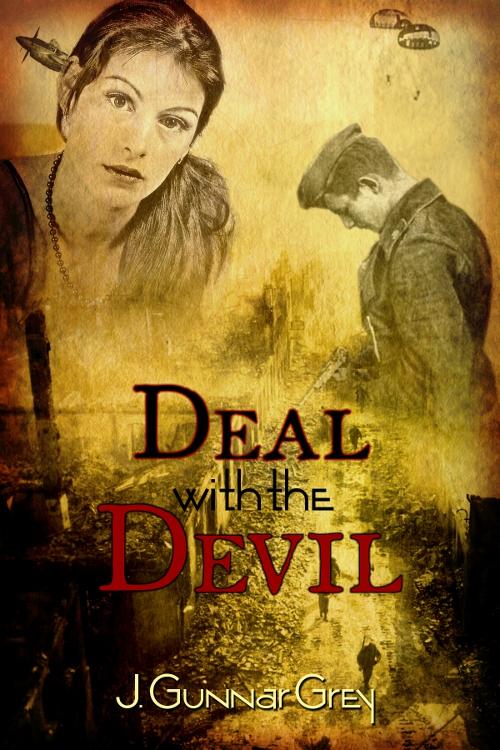
Wehrmacht Major Faust has a dangerous secret: he likes England. But it’s May 1940 and his Panzers are blasting the British Army off Dunkirk’s beach, so he keeps his mouth shut even though it hurts. When the Waffen SS try to murder their English prisoners of war, Faust helps the POWs escape. Now it’s treason, with his neck on the line.


Then a friend gets him drunk, straps him into a parachute, and throws him out over Oxford during a bombing run. He’s quickly caught. Because he helped type the battle plan for the invasion of England, Faust cannot allow himself to be broken in interrogation. Two German armies depend on it. But every time he escapes, someone rapes and murders a woman and the English are looking for someone to hang. He’s risking disaster if he stays, someone else’s life if he runs, and execution by the Gestapo if he makes it home.


Major Stoner, professor turned British intelligence officer, sees three possibilities. Faust perhaps was joyriding in that bomber, as he claims. Or he’s on a reconnaissance mission for the German invasion. Or he’s a spy. Stoner must break Faust to learn the truth, no matter how it strains his old heart. He must save England, and his granddaughter.


Their battlefield is confined to a desktop. Only one of them can win. Someone must break. Someone must make a Deal with the Devil.

To Purchase


Prologue

28 May 1940
Seven kilometers east of the Aa Canal, France

Fear squeezed the prisoners in an iron and icy grip. Clarke
could smell it, more pungent than stale uniforms and fresh sweat,
taste it in the dust caking his face and lips. The other British officers
sitting in a huddle around him stared at the dry turf between their
knees or off into some unknowable vacuum. None would meet his
gaze.

“How many of us are there?”

Beside him, Brownell shrugged and swiped at his brow with
one sleeve. With his hands bound it looked as if he shielded his face
from a blow. It grated on Clarke’s nerves, revved his rumbling
temper.

“Does it matter?” Brownell asked.

“It does to me.”

Brownell shot him a look, not so much baffled as vexed.
Good; a fight was better than collapse. They’d argued often in the
last weeks, as their steady school-­‐‑age friendship underwent some
sort of relational twist while the British Expeditionary Force
retreated across France. But Brownell held his peace. He half-­‐‑rose,
dark eyes scanning the small crowd and lips moving. Clarke’s
temper twisted, bitterness rising at the sight. Brownell had a well-­‐‑
deserved Oxford first in mathematics, but he still counted like a
five-­‐‑year-­‐‑old.

He didn’t deserve to be murdered.

Not far from Brownell, in the midst of a small emptiness left
by the lower ranks, a light colonel with tired eyes slumped over his
lap, epaulettes drooping to match his mustaches. He was the senior
officer in the group. He should take command, organize a fight. All
they had to do was get one man outside the guards’ field of fire,
and they’d have a chance. A suicidal chance, but better than being
murdered without a struggle.

But he just sat there, staring into space. Around him, none of
the many second lieutenants lifted their chins. One young subaltern
wept. All huddled together, as if needing warmth even in the direct
sunlight.

Beyond their circle, two grey-­‐‑clad soldiers lounged on
ammunition crates behind a tripod-­‐‑mounted machine gun. They
weren’t typical German Army soldiers, although the uniforms and
weapons were the same. These were something new the Germans
had invented, something called the Waffen SS, whatever that
meant.

Clarke lit his last cigarette, the binding cord cutting into his
wrists. They weren’t soldiers. They were criminals—murderers
dressed up and playing soldier, like a bunch of teenaged hoodlums
wearing Dad’s collar and tie whilst robbing the corner sweet shop.
It was ludicrous. Obscene.

“Do you want to use my fingers, too?”

Brownell’s cautious settling back ended with a thump and
one savage word. “There’s twenty-­‐‑two of us.”

Clarke’s swearing was whole-­‐‑hearted and much lengthier.

“Wonder who’s going to dig our graves. Think they’ll make us dig
them ourselves?”

“Shut up, Clarke. We don’t know anything for certain.”
Brownell crossed his legs again. His shoulders and bound hands
drooped, as if the knowledge he denied was heavier than he could
support.

“The blazes we don’t.” Clarke took a long drag, yanking the
smoke into his lungs until he choked. “Wonder how our kids have
grown.”
Brownell peered up at him without turning his head.

Clarke flicked ash. “The last photo Cezanne sent, Bobby
looked as if he’s overflowing her lap. I tried to figure out how tall
that would make him. But it wouldn’t matter if she’d taken his
photograph against a yardstick. I have to measure my son against
my leg or it means nothing.”

“You should have taken the leave.”

In February, with the invasion season in cold storage, the
48th (South Midland) Division had offered its staff and line officers
a brief visit home. None of them had seen their families since the
previous September. Brownell had gone and now his wife was
expecting their second baby. Clarke had made a point of staying
with the troops, who hadn’t been offered the option.

Now Cezanne would never have his second child, never
have the daughter she wanted so terribly—unless she remarried.
And that thought, more than his impending death, made Clarke
squeeze his eyes shut and swallow the tightness in his throat.
“I know.” He glanced from his cigarette to the turf. Maybe
starting a grass fire would help them escape. More likely the
Germans would let them burn.

“Clarke, you’ve always been a blooming fool.”

“I know that, too.”

Angry voices rose, climbing over each other, not close but
loud. Clarke stared past the machine-­‐‑gun emplacement to the
command tent, camouflaged beneath wispy trees. The Germans
inside had to be shouting toe to toe.

“What do you think the row’s about?” Brownell asked.

“I hope it’s about us, and I hope the German Army chap
wins.”

Brownell lifted his head. “You think so?”

Clarke shrugged. “Don’t recall much German from school,
and I can’t make out their words even if I did. They could be
arguing about us, their orders, or a skirt, for all I know.”
Brownell’s head sank again.

The voices fell silent. The tent flap whipped aside and two
German officers emerged. The Army officer, a non-­‐‑com’s side cap
replacing the usual peaked cap, stalked toward the huddled
prisoners, his riding boots raising puffs of dust. The Waffen SS
officer, Greis, followed more slowly, a little smile curving the
corners of his narrow lips.

Clarke’s heart sank. It was only too obvious who had won.
Near the edge of their huddle, the Army officer stopped,
legs spraddled, hands on hips, staring in a slow sweep as if he
wanted to impress every man on his memory. His face was pale,
with scorching blotches of color in his tanned cheeks. He breathed
as if he’d been running.

“What do you think?” Clarke glanced at Brownell. He froze.
Brownell’s staring eyes were huge. His mouth hung open for
a long moment. Then he snapped his jaw shut and wet his lips.

“It’s—”

But the Army officer was issuing orders, German words
stuttering in a staccato rhythm like a machine gun, and Brownell
swallowed the rest of his sentence. Automatically, Clarke turned to
see what the fuss was about—and smashed into the German
officer’s smoking glare, aimed right at him.

“You,” he said in English. “Come on. I don’t have all day.”
Two of the Waffen SS soldiers waded into the sitting
Englishmen, grabbed Clarke by the arms, and heaved him to his
feet. So this was it; he’d go first. His legs were asleep, but he’d go
die before he’d take any help from these murderers. He shook off
their arms, dropped his cigarette butt, and forced his tingling legs
to carry his weight as they escorted him, one on either side, to the
German officer.

Halfway there, he glanced back at Brownell. His mouth was
open again and he was half on his feet, legs beneath him as if for a
sudden push. Clarke shook his head—Brownell needed to save his
major effort for his own life, not waste it on a fool’s attempt at
gallantry—and mouthed goodbye. Without waiting for a response,
he turned away.

It was a ruddy awful way to part.

When Clarke turned, he was eye to eye with the German.
Although they weren’t close and sunshine blazed between them,
there seemed barely room between their bodies to breathe. The heat
of the German’s anger smoldered still, like a flare not quite burned
out. But his brown eyes were clear and even a trifle desperate as he
gazed into Clarke’s, as if he awaited some response and they were
all running out of time.

Clarke sniffed in his face.

The German turned away. Was it Clarke’s imagination, or
was the tinge of color in those cheeks even darker? He could only
hope.

“Right,” the German said over his shoulder, “come on.” He
led the way to his open staff car, on the far side of the tent.
The SS guards crowded Clarke on either side, forcing him
along. He passed close enough to Greis—the murderer—to punch
him. It was tempting, but Clarke resisted. It would only get him
killed sooner.

The guards put Clarke into the front passenger seat of the
staff car. A layer of dust coated the faded interior. The officer slid
behind the steering wheel. Greis sauntered to the driver’s side and
leaned one gloved hand against the door panel as the officer started
the engine.

“Are you certain you can handle the prisoner alone?” A
mocking half-­‐‑smile still adorned Greis’s lips, the smile of the
winner. He adjusted his black leather gloves, never glancing at
Clarke. Despite the smile, there was no humor in his narrow
hatchet face, only contempt. “Perhaps I should have one of my
soldiers accompany you.”

Clarke seethed. He should have chanced a punch.

The officer shifted gears. “Your soldier’s welcome to run
along behind.”

The smile slipped by a hair, then resumed. Only now it
seemed fixed.

The officer released the clutch and gunned the engine. A
spurt of dust slewed over Greis’ polished boots and up to his
squenched eyes.

Clarke stared back at Brownell’s strangely hopeful face until
the encampment was cut off by rising ground. Then he swung
about. The dusty road rolled toward the staff car then vanished
beneath it. Strong sunlight baked the interior, and he smelled fresh
sweat along with the mechanical blend of oil and petrol. The engine
vibrated up his spine, tapped against his eardrums.

One man. One pistol. No rifle, no tommy gun. No guard.
After the wisecrack at Greis, he’d regret killing this man. But
he’d do it. A single pistol wasn’t much firepower, but with it he
could take this one, then return to the encampment for the
prisoners. They didn’t have to die today.

The Wehrmacht officer took the road over the crest of a
small ridge and down into a grove of trees. To their left, the land
dipped into a shallow valley, matted with brush and low trees that
swarmed up the slope to the road. To their right, the trees
thickened into a forest toward the ridge’s crest.

Under the midday twilight of that canopy, the Wehrmacht
officer steered the staff car onto the verge and killed the engine. In
the silence, Clarke listened to his heart beating and knew with cold
certainty he didn’t want to die for the hopeless defense of France.
He twisted his wrists, trying to break the cords, but they only cut
more sharply. The silence was so deep he thought he could hear the
German’s heart, too; then Clarke wondered if the man even had
one.

He faced the German as he, too, slewed in his seat. Again
they stared at each other, and Clarke took stock of his new captor.
This was the man he had to defeat, even kill, if he and the others
were to live.

They seemed the same height, an inch or so beneath six feet.
But while Clarke was solid, the German was more slender,
shoulders tapering to hips, which needed suspenders. His face
echoed that line in a wedge shape, broad at the forehead and
narrowing through well-­‐‑defined cheekbones to a pointed chin. His
brown hair was dark, the color of cocoa, and combed back from his
high forehead in the Continental fashion. A formidable reserve of
energy fired his eyes from within; even sitting motionless behind
the wheel of the car, he seemed to vibrate like a tuning fork, and
Clarke wondered how he kept his hands still.

Like most modern German officers, he was clean-­‐‑shaven, his
uniform tailored although not of the highest quality. The Iron Cross
ribbon, red and white and black, decorated his left breast pocket;
the knotted silver cords on his shoulders were bare of insignia, in
the manner of a major. His earlier anger had drained, leaving his
brown eyes clear, and Clarke knew he wasn’t imagining the touch
of derision now in their depths.

For one crazy moment, Clarke believed he had known this
man at some point in their past and he had only to sweep away the
agitation to remember a more innocent age. But of course it was
impossible. His subconscious thoughts were returning—to
Sandhurst, University College, Eton, or even his father’s estate, this
German officer symbolizing someone haunting his memory. One
thing for certain; this man didn’t have the polish of rank. There was
an earthy edge beneath his combat-­‐‑hardened sophistication.
Clarke pushed the thought aside and cleared his throat. “Is
this it, then? Shot while attempting to escape?”

The German produced a pack of cigarettes and shook one
halfway out. “Do you use these things?”

Clarke fought his pride—he didn’t want to accept anything
from a German—but his sudden nicotine craving was stronger. He
took the fag and the light that followed, and cradled it in his bound
hands for a drag. “A last cigarette?”

“Every condemned man deserves one.” But the German’s
tone was light.

“It’s not a joking matter.”

This time the German’s stare was considering. “You’re
right,” he finally said. “It’s not.”

“I know what happened at Guise.”

“So do I.” The German seemed to reach a decision and
opened his door. “Step out. I want to show you something.”
Clarke hesitated. The German shrugged, drew his pistol,
snapped the magazine from its butt and pocketed it, and tossed the
gun itself onto the dashboard. “We don’t have much time. Come
on.” He closed the driver’s door softly and stepped to the opposite
verge of the road.

For a moment Clarke stared, flabbergasted. But he wasn’t
hallucinating. His only guard had unloaded his only weapon and
turned his back. The shelter of the trees was on his side of the road
and temptingly near. But his curiosity won the brief struggle. There
had to be a reason for this otherwise senseless behavior, and Clarke
wanted to know what it was. He followed the German to the
opposite side of the road and stood beside his enemy.

The German cupped his cigarette in his left hand, glowing
edge toward his palm, and gestured to the shallow valley at their
feet. Neither hand left the deepest shadows spread by the trees
overhead.

“See them?”

It took a moment. Then a motion caught his eye. The valley
was alive with camouflaged yet shifting forms. He peered closer
and made out netting, a half-­‐‑track, machine-­‐‑gun nests, hammocks.

“On the left,” the German continued, “those are Greis’s
Waffen SS troops, from the Leibstandarte Adolf Hitler.” He paused
for a drag. “Undoubtedly some of the best soldiers I’ve ever seen.”
“Murderers.”

“That, too.” He pointed with his chin. “On the right, those
are elements of my own division, the First Panzer.” He peered
sideways at Clarke through the gloom, smoke drifting from his
mouth. “A Wehrmacht unit.”

Clarke peered back, his mind blank.

The German sighed. His gaze dropped openly to Clarke’s
upper-­‐‑sleeve regimental insignia for the Royal Warwickshires. He
straightened and grunted. “Infantry. Oh, frag. I’ll try using small
words.”

Heat climbed Clarke’s neck. “Is that an insult?”

He got another sideways stare. “If you’re in any doubt—”

The German took another drag, eyes slitted against the smoke.

“We’re all tired, you know. The campaign hasn’t been long—”

“Six ruddy weeks.”

“About right—but we haven’t stopped until today. Are you
catching on?”

“No,” Clarke snapped. “I am not catching on. What are you
getting at?”

The German closed his eyes. “The two units haven’t joined
up well, have they? You could march a brass band through there at
full volume and nobody would notice.” Again the sideways glance.

“Especially if the brass band in question kept to the Wehrmacht
side.”

Clarke got it. “Did you have any particular brass band in
mind?”

“Progress.” The German nodded once. He ground the butt
of his cigarette underfoot without ever showing the fire edge to the
valley. “Three days ago, Greis—the pig back there—”
“I know who he is.”

“—murdered thirty British officers at Guise. He didn’t have
facilities to hold them; he didn’t want to spare the troops to guard
them. He claimed he had orders and it was in retaliation for the
officers he’d lost in combat. So he ordered them shot.”

“I know.” An admission of knowledge seemed to be the only
intelligent thing he’d said all day. He dropped his own cigarette
and asked the question that mattered most to him. “Did he make
them dig their own graves?”

“French privates,” the German said, his tone cool but not as
cool as it sounded. “The mass grave was multinational. I heard him
give the order, I saw the massacre, and I saw the grave filled. Well,
the situation hasn’t changed. He’s amassed British officer prisoners,
whom he particularly hates because you didn’t flock en masse to
the Anglo-­‐‑Saxon banner Hitler waved. He doesn’t have facilities
prepared for you, and he doesn’t want to spare the troops to guard
you or move you to the rear. He still claims he’s under orders,
although I let him know I couldn’t find any reference to them at
headquarters. And nothing else I said made any difference, either.”
Clarke fought his mulishness. His decency won. “Thank you
for trying.”

The German gave him a puzzled glance, then pulled a
penknife from his pocket and sliced through the cord binding
Clarke’s wrists. As he folded the blade away, he nodded toward
the distant glint of water. “That’s the Aa Canal.”

“I know what it is.”

“Just checking. We have orders to stop there.”

Clarke stared. “Can’t imagine why.”

“Neither can I.” The German shrugged. “It’s a mistake, of
course. If we truly wanted to destroy you, we should keep going all
the way to the beach and drive you into the water.” His sideways
glance this time was a curious mixture of pride, shame, and
defiance. “You and I both know the B.E.F. doesn’t have the
firepower left to stop us.”

Just another German after all. “That’s your opinion and not
any sort of fact.”

The German grinned. In the shadows and gloom beneath the
trees, his face lightened as if by magic. They had to be close in age.
A vague tremor of unease made Clarke’s fingers tingle; he refused
to call it envy. While he had frittered away his—and his wife’s—
youth in an all-­‐‑out assault upon law-­‐‑court silks, this German had
learned how to live. While he had developed a career, this man had
developed his character.

“I expected no less from you,” the German said. “Our orders
come from the highest. They say stop at the Aa Canal—so no
matter what we think, we’ll stop at the Aa Canal. And that
means—”

“—that means,” Clarke interrupted, “anyone down on the
beach will be out of range of your artillery.”

The German nodded. “So long as the brass band reaches the
canal before, oh, five o’clock tomorrow morning. That’s about how
long it will take us.”

So there it was. This German major offered life and
freedom—for him. Not for Brownell, nor the colonel with the
drooping shoulders, nor the weeping subaltern or anonymous
lieutenants squatting on the scuffed turf. Clarke tried to harden his
heart. He couldn’t.

He cleared his throat. “Why are you doing this?”

This time, the German’s sideways stare was compounded of
equal parts derision and hilarity. He shook out two more cigarettes,
passed one to Clarke, and lit both behind the cover of his turned
shoulder. As an afterthought he handed over the remainder of the
pack and the matches.

“Do you remember the cricket match against Cambridge?”
he asked.

Clarke forgot the landscape and even the doomed prisoners.
He stared at the German officer and it was as if a spotlight slowly
illuminated the man within his memory.

“Of course,” the German continued, “I couldn’t follow
cricket in those days. For that matter, I still can’t. But even I knew
we were in deep trouble. We were so far behind we could barely
see daylight.”

The face in Clarke’s memory wasn’t sophisticated or battle-­‐‑
hardened. It was a younger face, uncertain, wide-­‐‑eyed, softer about
the edges, but nevertheless the same. The body was more slender,
bulked out by a cheap, rusty-­‐‑black academical robe, the thinner
arms juggling an armload of used poetry textbooks. Even the
memory made Clarke sneer. And in a heartbeat he was ashamed of
the sneer and of himself.

“But then the coach sent you in to bat,” the German rambled
on, oblivious, “and it was as if the whole field came alive, the
spectators, the team, everyone. You strode onto the pitch with your
head in the air, the bat in your hand, a swagger in your step, and
for one shining moment there was no doubt within the entire of
Oxfordshire that you could do it.” He shrugged and flicked ash.

“We still lost the match, of course, but I have to admit you looked
magnificent just walking onto the field.” No sideways stare this
time; the German turned to face him squarely. “Do you recognize
me yet?”

“You’re—”

“—yes, that grubby foreign exchange student, the one who
was too poor to buy a sweater for the winter.” He dropped his half-­‐‑
smoked cigarette onto the verge and stepped on it. “I never forgot
you, Clarke. Of course, there’s a world of difference between the
upper classes laughing, and the lower-­‐‑ and middle-­‐‑class sources of
their amusement.”

“Look—”

“Don’t bother.” The German turned and strode back to his
car.

Clarke thrashed his memory and dredged up a name.

“Faust—your name’s Faust.”

“Really.” Major Faust retrieved his pistol from the
dashboard of the staff car and handed it butt-­‐‑first to Clarke, his left
hand hurling the loaded magazine into the deepest grass within the
shadows of the forest. “I don’t have anything heavier with me, so
that’s the best I can do for you. The evacuating British troops are
massing on the beach outside Dunkirk. I suggest you get down
there as soon as it’s dark. There should be enough soldiers who
haven’t lost their Lee Enfields to make a raiding party and rescue
the encampment. Who knows, they might even have some
ammunition.”

Clarke ignored the pistol in his hand and stared at Faust. It
was an insane risk, the sort taken by the legendary Dr. Faustus—a
practitioner of dark, mysterious metaphysical arts, someone who
commanded the sun and the moon, the winds and tides, the forces
of Mars, with utter disregard for his own future safety.
Clarke shuddered.

Still oblivious, Faust opened the car door and paused, one
foot on the running board. “At Guise, Greis waited until a few
minutes before midnight before opening fire. But there’s no
guarantee he’ll be so patient this time. He thinks I’m taking you to
headquarters for interrogation, so they won’t expect you back and
they won’t wait. Wear something over your face, and I might get
away with this.” He stepped into the staff car. “Good luck, Clarke.
My regards to Brownell after you rescue him.”

“Wait.” Clarke didn’t recognize his own throttled voice.
“Why are you doing this?” Even as he said it, he knew it wasn’t the
best way of asking his question, it wasn’t even the proper question
and in his current agitation, he didn’t know how to rephrase it. But
Faust was pressing the starter and his moment was over.

Faust rolled his eyes. “You don’t have time for this. Oh, and
if you get a chance, put a bullet through Greis for me, would you?”
He shifted gears and the car rolled forward. “Pigs like him give all
us Germans a bad name.”

The staff car disappeared around the next bend, leaving
Clarke standing in the middle of the shadowy road. He desperately
wanted the answer to his question. He’d never hear it now, and
that bothered him most of all.

He fell to his knees in the long grass, scrabbling for the
loaded magazine.

Monday, March 12, 2012

Author Recipe: Puppy cookies

Written by: J Gunnar Grey

When it comes to pets, I’m a fusser. Are they getting the best nutrition? Do they like their food? Are they happy? We owned two wonderful mutts for sixteen years, and my husband likes to comment it’s a good thing we never had kids, because just with dogs I drove him sufficiently mad.

Anyways, one day I discovered what some pet food companies insert into dog food and biscuits. There’s plenty of info on the topic online, so I won’t go into the specifics. Instead, here’s my solution to the problem: I began cooking my own dog food at home, using the same groceries we purchased at the store for our own meals. And of course, while they loved the ground beef, tuna, eggs, oatmeal, and no-salt canned veggies, like all kids their favorite part of the meal was dessert.

Even when they were teenagers, the vet commented on their continued health. And sassiness. These puppy cookies, as I call them, were likely the main cause. Not the spoiling.

It’s been two years now since they’ve gone. Miss you, kids.

Dessert: Puppy cookies

Combine 1/2 cup each of corn meal, powdered milk, and oatmeal. Stir in 2 cups of whole wheat flour (white flour also works). Use a pastry cutter to cut in 1/4 to 1/2 cup fat, drippings, or shortening. Stir in one egg and resist the temptation to add another when it doesn’t seem to be enough; trust me, you will regret surrendering to that temptation when the dough turns into a gooey, yucky mess. Granted, mine ate these and begged for more no matter what I did to it.

By the time I reached this point in the recipe, Worf was generally lying on the kitchen carpet behind me, tail quivering nonstop, and Tasha was watching from beneath the table, teeth gleaming with a feral pant.

Stir in sufficient water to form a stiff dough; too much and you won’t like yourself here, either. Between 1/2 cup and 3/4 cup is plenty.

Thickly dust a cutting board with flour. Turn out the dough and dust it again. Knead the mess for five minutes, adding flour to achieve a stiff, exhaust-your-fingers texture that doesn’t stick to everything it touches.

Divide dough into quarters. Roll it out fairly thin, to 3/8 or 1/2 inch at most. Use a knife to cut it into little squares. Microwave on high for three minutes. Flip them over and continue microwaving on high until they’re hard to a thumbnail thump. They also bake in a regular or toaster oven. Thicker biscuits require longer to cook.

None of this is rocket science so while cooking, don’t sweat the proportions too much. While feeding, keep in mind that this is dense food; it’s very easy to both over- and under-feed, leading to heavy dogs (not good) or thin ones that lick their bowls all day (entertaining but not good either).


Blurb:

In August 1940, German Army Major Faust is captured by the English and he must escape before they break him. But every time he gets away, a woman is raped and murdered, and the English are looking for someone to hang. Faust must catch the killer, even though he’s helping the enemy — even though he’s making a Deal with the Devil.

Excerpt:

Something soft and annoying whooshed past his face. Faust brushed at it, but it was already gone and he was too fragging sleepy to care. He dropped his arm to the bed.

There was no bed.

There wasn’t anything. His arm was dangling out in space. So was the rest of him. Faust snapped his eyes open. A strong wind pummeled him, tumbled him head over turkey. The ground was a long way down. He was falling and it was real, not some stupid nightmare.

Panic leapt like a predator through his veins. He twisted, fighting against gravity. An icicle of light from the distant ground stabbed at his eyes, swept past him, and several red flashes popped in quick succession. A rumbling vibrated the air, something sounding like an artillery round exploded nearby, and sharp chemical smoke scoured his nostrils.

Tight cords wrapped about his body, between his legs, jerking him upright and throwing him higher, dangling him across the light-slashed night sky. The rumbling intensified. His head snapped back. Above him, a parachute canopy blazed white in the spotlight from below. Beyond it loomed a huge dark beast, moving past in impossible slow motion. It towered over him. The parachute danced closer, second by drawn-out second; then it bowed, canted, and slid away, laying Faust on his back as it hauled him aside.

He gripped the harness shroud lines, chest and belly flinching. It was the bomber, the one he’d been riding in. The belly hatch framed Erhard’s laughing face, lit from below by a spotlight. With one hand, Erhard clutched the rubber coaming, cupping the other about his mouth. He yelled something — something short — which was overwhelmed by the racket and growing distance.

Maybe the plane was having mechanical problems — but they and the mechanics had tuned the Heinkel’s twin engines all afternoon. No one else was bailing out.

Erhard had thrown him overboard.

It didn’t matter how much schnapps he’d slugged nor how drunk he remained. When Faust hit the ground, Erhard was toast.

Wednesday, March 7, 2012

Obsessions: A Parakeet Regency

Written by J Gunnar Grey

My newest parakeet has an obsession: dried papaya bits. But she doesn’t eat them. She throws them.

Okay, this requires some explanation.

I’ve got four of the little fluffballs: Pete, Tweet, Jeep, and Jeepette. Tweety-saurus Rex, my first budgie, a green-yellow opaline clearflight hen, is the single most destructive ounce on the planet. She can rip through a treat stick in less than an hour — not eating it, but shredding it, all over the floor. I once bought her a lovely wooden ladder. She decimated the lowest rung, leaving little stumps on either side which she then stood on so she could attack the next higher rung. All the way up, until she had two separate ladder-halves. The next ladder I bought was plastic and she ignores it with a fine disdain.

Pete’s her devoted mate, although in true Regency style she treats him like dirt, hogging (and destroying) their treats without letting him have more than a bite. I have to put two of everything in their cage, on opposite sides, just so the poor guy can eat. But even after Tweet’s hardest nip and loudest scolding, Pete always comes back, snuggling up, cooing sweet nothings, and scratching all her hard-to-reach places. He’s a beautiful, classic sky blue-white and yes, he’s truly henpecked.

I had these two for seven years and they’ve been a delight, albeit a messy and noisy one. Then my sister got seriously busy at work until she had no time to care for her parakeet, Jeep, a bright, wild-type green-yellow. At the same time, his “wife” died, leaving him sad and alone. When Debra saw that he was losing weight, pining away, she asked me to take him and of course (without mentioning the arrangement to my husband) I agreed.

My first thought was to put Jeep in the same cage with Pete and Tweet, but I was leery. Visions of tiny gladiator duels and flowing bird blood flashed through my head. But he was clearly upset, sitting all alone in his bachelor-pad cage while Pete and Tweet chattered in their tempestuous love-nest, and he wasn’t putting on weight no matter what tempting morsels I put in front of him. So of course there was only one thing to do.

Debra had told me how Jeep and his deceased wife used to sleep together, huddled on their swing. I went to the bird store and watched until a young hen fluttered unsteadily up to the swing in the big glass cage, fluffed out her feathers, and settled in for a nap. Shortest nap in parakeet history: I bought her and took her home. Jeepette’s an unusual color, a grey-blue type 1 yellowface, kind of like the wrong feathers were glued on in the budgie factory. It’s a striking combination.

Jeep fell claws-over-wings in love and reverted to typical male parakeet behavior, bouncing all over the cage, chattering nonstop, and playing kissie-kissie games with his somewhat bemused young wife. They share everything — the swing, the feed dish, the mirrors, the ring toy, and each perch in turn. Jeepette likes to hang upside-down from the swing, sailing back and forth and kissing her guy in passing.

And they share treats. Side by side, they reach down together and take a bite. Jeep’s usually finished first, but he waits for Jeepette to finish her dainty little nibble and then, again, they reach down together. Jeepette is still growing and needs her nutrition; Jeep is now facing a birdie diet.

So, this week at the birdie store I noticed a manager’s special on the Sunny Brunch Pick-Snack. (Amazon link, if you’re curious.) It’s a sort of shaped cup made from pressed-together seeds, filled with dried papaya chunks. I dropped one in each cage and waited for results.

Last night while editing Kay’s and Kim’s upcoming human Regency, A Lot Like a Lady, I kept hearing an odd sound over my shoulder, a sort of plop every few seconds. When I turned around, Jeepette stood at the Pick-Snack, looking innocent but suspiciously alert. After a half-hour of guessing her nefarious intentions, I finally caught her at it. She was surreptitiously tossing the papaya bits from the seed cup to the floor of the cage.

Can’t trust those hens.

Naturally I retrieved them, made sure they were clean, returned them to where they belonged so they could be eaten, and then resumed work. Within seconds I heard it again: plop plop plop. She was picking up speed.

Three more times last night I cleaned up after her, and all the papaya bits were in their proper place when I covered cages before bed. This morning when I uncovered them, the little bits were scattered everywhere, further afield than last night. And now I’m hearing a new sound: scritch scritch scritch *whizzz* thump. She’s picking one up, scuttling across the emery perch to the cage’s farthest reaches, and throwing it with a jerk of her pretty little head, smashing her food against the bars or the gravel-covered floor.

Jeepette’s obsessed with papaya bits. But she’s eating the cup.

And despite what anybody says, I am NOT obsessed with my parakeets. Just saying.


Blurb:

In August 1940, German Army Major Faust is captured by the English and he must escape before they break him. But every time he gets away, a woman is raped and murdered, and the English are looking for someone to hang. Faust must catch the killer, even though he’s helping the enemy — even though he’s making a Deal with the Devil.

Excerpt:

Something soft and annoying whooshed past his face. Faust brushed at it, but it was already gone and he was too fragging sleepy to care. He dropped his arm to the bed.

There was no bed.

There wasn’t anything. His arm was dangling out in space. So was the rest of him. Faust snapped his eyes open. A strong wind pummeled him, tumbled him head over turkey. The ground was a long way down. He was falling and it was real, not some stupid nightmare.

Panic leapt like a predator through his veins. He twisted, fighting against gravity. An icicle of light from the distant ground stabbed at his eyes, swept past him, and several red flashes popped in quick succession. A rumbling vibrated the air, something sounding like an artillery round exploded nearby, and sharp chemical smoke scoured his nostrils.

Tight cords wrapped about his body, between his legs, jerking him upright and throwing him higher, dangling him across the light-slashed night sky. The rumbling intensified. His head snapped back. Above him, a parachute canopy blazed white in the spotlight from below. Beyond it loomed a huge dark beast, moving past in impossible slow motion. It towered over him. The parachute danced closer, second by drawn-out second; then it bowed, canted, and slid away, laying Faust on his back as it hauled him aside.

He gripped the harness shroud lines, chest and belly flinching. It was the bomber, the one he’d been riding in. The belly hatch framed Erhard’s laughing face, lit from below by a spotlight. With one hand, Erhard clutched the rubber coaming, cupping the other about his mouth. He yelled something — something short — which was overwhelmed by the racket and growing distance.

Maybe the plane was having mechanical problems — but they and the mechanics had tuned the Heinkel’s twin engines all afternoon. No one else was bailing out.

Erhard had thrown him overboard.

It didn’t matter how much schnapps he’d slugged nor how drunk he remained. When Faust hit the ground, Erhard was toast.

Saturday, November 5, 2011

How to keep dead bodies sweet


How to keep dead bodies sweet
By Gunnar

There’s a dichotomy in the very idea of a cozy mystery. See, most cozies (or any other mystery) involves solving a murder or other violent crime, and murder is a messy, ugly, grotesque affair. There’s all that blood, bodily fluids, violence, and after a while the stench—okay, okay, you get the idea. And that’s the problem: readers who like “sweet” stories don’t want all that nasty stuff, even though it’s inherent in murder. So what’s a writer to do?

Focus on the characters and the puzzle, not the crime. Readers of cozies aren’t here for the gore. They want to meet interesting characters who do interesting things, and track the clues, watch the plot unfold, as the mystery is solved. They want to match wits with the writer, hoping they’ll lose. If you have an overwhelming urge to write every detail of the murder in progress, consider trying your hand at a thriller or police procedural, where such in-depth violence is accepted and even sought.

In the same way, keep ugly descriptions discreet. Don’t spend too much time telling readers about the spray of blood, the savage injuries, or the victim’s terror. Heavy descriptions weigh down cozies, which are supposed to be lighter reading. Instead, try using suggestion when a description of violence is necessary. Here’s an example from my historical mystery, Deal with the Devil:

“Not as bad as the other.” Arnussen indicated the mush that had once been a young girl’s chest. “Not as much bruising on the face, either.”
“Still a lot of rage, though. How many times do you think he stabbed her? Twenty, thirty?”
“Something like that.”
Hackney forced himself to examine her nude body, the blood splatters on the headboard, the bruising and overkill, and implant all of it into his memory. The only thing he touched was her dark hair spilling over the pillow.

Through the imprecise nature of the detectives’ dialogue, the reader gets the impression of a brutal crime scene, without having to endure the details. Even though Deal isn’t specifically a cozy, the technique is the same.

Explore the emotions rather than the actions. In the example above, did you get the impression Sergeant Arnussen isn’t as affected by the crime scene as Detective Inspector Hackney? Well, that was my goal, at least. Arnussen’s not hard-hearted or unfeeling, by any means. But every time Hackney examines a murder victim, a little piece of his soul dies. By demonstrating his sadness, by inviting the reader to experience that emotion with him, I keep the focus on the characters rather than the crime scene.

With romances, writing “sweet” generally means keeping any sex scenes offstage. With mysteries, it’s the violence that requires discretion. Handled properly, even the grisliest murder can be turned into a cozy, by keeping the reader’s attention on the characters, the puzzle, and the emotions, rather than the ugly stuff. Such subtlety can keep the worst dead body sweet.

Wednesday, November 2, 2011

Mystery genres: part two


Mystery genres: part two
By:Gunnar

In addition to mysteries, there are several other genres considered part of the crime fiction stable, each with its own format and reader expectations.

Thrillers are page-turners. If the classic mystery can be summed up as a whodunit, then thrillers are will-they-get-away-with-it stories. Usually the reader knows who committed the crime, as well as how and why; the thrill involves pitting the good guys against the criminals in a race against the clock, with a prize at the chase’s end. The prize can vary and possibilities include money, state secrets, military hardware, gold bullion, priceless artwork, and a person’s life or freedom. The broad category of thrillers is divided by subject matter and focus: medical (Robin Cook’s Coma), legal (just about anything by John Grisham), psychological (Alfred Hitchcock’s Psycho), political (David Baldacci’s Absolute Power), espionage (“Bond. James Bond.”) and war and the military (Alistair MacLean’s Where Eagles Dare).

Techno-thrillers, a relatively new addition to crime fiction, were invented by Tom Clancy with his ground-breaking novel The Hunt for Red October. Here the focus is equally divided between the Soviet sailors’ attempt to defect, and the technical features of the new submarine they’re taking with them. This split focus, with its analysis of a technology’s inner workings, separates techno-thrillers from more traditional war and military thrillers, which may use the same technology but refrain from discussing it. A related and often overlapping genre, near-future speculative thrillers, creates the technology and projects it a few years or decades ahead, with the writer exploring how his creation can change the world. Note that, while Clancy created the technology of the Soviet submarine, he placed his story in the near past rather than the future. Also note that the “crime” in these categories of crime fiction are generally between political entities rather than individuals.

Suspense or adventure novels focus on what happens next, as the characters attempt to survive some disruption in their previously smooth and orderly world. These novels stretch the definition of “crime” yet again — a popular category, survival after an airline crash in the wilderness, may be caused by clearly criminal elements such as terrorism or hijacking, or by pilot error or a careless mechanic neglecting to fasten down a cargo container. No matter the cause, though, the characters must cope with the disaster that follows. War, espionage, and the military are common features in these novels (Alistair MacLean’s The Guns of Navarone and Patrick O’Brian’s Aubrey-Maturin novels of the Royal Navy), as well as natural disasters (crimes by nature), such as Sebastian Junger’s The Perfect Storm.

Caper stories tell the tale of a crime, from planning through execution and the subsequent aftermath, most commonly from the perspective of the perpetrators. The true caper involves a high-stakes game, with a superbly valuable prize protected by supposedly impenetrable security, and a team of experts determined to take it down. Common but not universal features include a charismatic team leader who organizes the heist, in-depth planning and practice sessions that are often organized by numbers or rhymes, and something going horribly or comically wrong at the penultimate moment. Capers can be funny (Donald E. Westlake’s Dortmunder series) or serious (Ocean’s Eleven, Kelly’s Heroes), featuring professional criminals (John Godey’s The Taking of Pelham One Two Three) or private citizens with a grudge against a corporation or political entity (Edward Abbey’s The Monkey Wrench Gang). They require great imagination and involve a tremendous amount of work, including in-depth plotting, from the author, but are among the most popular of all crime fiction genres.

Romantic suspense adds a kiss and some personal chemistry to the crime fiction blend. Any category of crime fiction — mystery, espionage, thriller, war, caper, even techno-thriller — can be turned into romantic suspense if the hero and heroine are making eyes at each other. They may team up to more efficiently fight criminals, the political process run amok, a corporation or organization, to survive a war or natural disaster, or to steal a priceless Rembrandt. Less commonly, they may be on opposite sides of the fence, with one a criminal and the other a detective, and one of them must change sides in the name of love. Because this is a split genre, the two plotlines, the romance and the crime fiction, must roughly balance each other in intensity and quantity. If the suspense plotline carries more weight, the ending can be questionable, but if the romance plotline is more important, then happily-ever-after must prevail.

Finally, crossovers spread the elements of crime fiction into other genres, most recently including science fiction, fantasy, urban fantasy, and horror. A police procedural may be set in an urban world of angels, a team of vampires may plot a caper to rob a blood bank, a time-traveling amateur detective may find herself up against a werewolf Jack the Ripper. In crossovers, anything and everything can happen, but the crime still must be solved.

While some mystery writers deplore these obviously speculative concoctions, others remember that in the 1920s, the ultra-realistic police procedural originated as a backlash against the unrealistic cozy. It’s possible these spec fic crossovers are another example of new genres breaking free, giving rise to new story opportunities for writers — and lots of new fun for readers.

Tuesday, November 1, 2011

Mystery genres: part one


Mystery genres: part one
by Gunnar

“What’s in a name?” Juliet asked the velvet night. A rose, after all, would delight us with its scent no matter what we called it.

But in the crime fiction genres, the name tells us a lot about what we’ll find between those covers. Mysteries, for example, range from delightful cozies to hard-boiled police procedurals — but a thriller is something else entirely and romantic suspense something else again. And capers aren’t only found in the woods, you know. So for your delectation, here’s a brief discussion of the categories that are generally lumped together under the heading of crime fiction.

Mystery is the original and classic of these genres, invented by Edgar Allan Poe with his 1841 short story, “The Murders in the Rue Morgue.” These are detective stories, where a crime’s been committed and someone must figure out whodunit so that justice may be served, and the reader’s fun lies in pitting wits against the book’s main characters, the detective and the villain. Arthur Conan Doyle made these stories popular in Victorian times with his celebrated consulting detective, Sherlock Holmes, and a slew of brainy writers made them the most fashionable books to read in the 1920s, 1930s, and 1940s. In the United Kingdom, everyone was reading Agatha Christie (first published in 1920) and Dorothy L. Sayers (1923). In the U.S. Ellery Queen brazenly told his readers when they should have solved the mystery, if they’d been paying proper attention. (This “Challenge to the Reader,” introduced in 1929, was a page near the end of the novel where the author stated that only one solution was now possible.)

But even as these writers perfected the classic mystery tale, the genre began to shatter. These brilliant stories, so perplexing and challenging, were also cerebral and unrealistic. Murders happened, but in the most bizarre of manners and always (always!) offstage, with no visual violence to mar the serenity of the tale. They happened in locked rooms, where no one entered or left, in theater companies, in art galleries — in civilized places rather than dark alleys. Amateurs drawing on their life’s experiences out-detected police professionals, usually in English country villages or Manhattan parlors. And would a murderer really hang around the scene of the crime long enough to strip the victim and replace all his clothing the wrong way around? (The Chinese Orange Mystery by Ellery Queen, 1934. All the furniture in the room was reversed, too.)

Dashiell Hammett didn’t think so, and he was a Pinkerton operative so he should know something about this. In 1923 he began writing a different type of detective story, one with a focus on police stations, private detectives, forensics, weaponry, and the law. He was followed by other writers who felt the same: Earle Stanley Gardner, Raymond Chandler, Mickey Spillane. Their stories were dark, violent, often stark commentaries on modern city life, and distinctly American. Although these stories fascinated a different audience, they became just as popular as their gentler counterparts.

Today these two different categories of mysteries form the two ends of a genre spectrum. On one end is the so-called cozy, with an amateur detective and the violence covered by a lace tablecloth; on the other end is the hard-boiled police procedural, with autopsies on cold metal slabs. Most modern mystery novels fall somewhere between these bookends, with varying degrees of realism, police involvement, and on-screen violence. Cozies tend to focus on the puzzle, with the story’s climax coinciding with the revelation of whodunit, while police procedurals may reveal the criminal’s name earlier and instead focus on the take-down and evidence collection. Female readers tend to lean toward the cozy end of the spectrum, male readers toward the hard-boiled end, but like all other generalizations, this one shouldn’t be considered absolute.

"To Dr. Lee McClain of Seton Hill University's Writing Popular Fiction Program, for insisting I learn all this no matter how much I whinged."
http://www.setonhill.edu/academics/fiction/faculty_get.cfm?FacultyID=67


Monday, May 9, 2011

Character Monday: Three Characters One Devil in Deal With the Devil

Happy Monday readers! We at Astaea Press hoped that you all had a fabulous Mother's Day yesterday. Today we are pleased to have J Gunna Grey author of Deal with the Devil Part 1 is here talking about the characters in her book.


Wehrmacht Major Faust has a dangerous secret: he likes England. But it’s May 1940 and his Panzers are blasting the British Army off Dunkirk’s beach, so he keeps his mouth shut even though it hurts. When the Waffen SS try to murder their English prisoners of war, Faust helps the POWs escape. Now it’s treason, with his neck on the line.

Three months later, a friend gets him drunk, straps him into a parachute, and throws him out over Oxford during a bombing run. He’s quickly caught. Because he helped type the battle plan for the invasion of England, he cannot allow himself to be broken in interrogation. Two German armies depend on it. But every time he escapes, someone rapes and murders a woman and the English are looking for someone to hang. He’s damned if he stays, risking someone else’s life if he runs, and risking execution by the Gestapo if he makes it home.

Major Stoner, Oxford don turned British intelligence officer, sees three possibilities. Faust perhaps was joyriding in that bomber, as he claims. Or he’s on a reconnaissance mission for the German invasion. Or he’s a spy. Stoner must break Faust to learn the truth, no matter how it strains his old heart. He must save England, and his granddaughter.

Their battlefield is confined to a desktop. Only one of them can win. Someone must break. Someone must make a Deal with the Devil.


In Deal with the Devil, three characters are on a collision course. Two are fighting to break each other. The third waits to one side, unable to intervene and doomed to pick up the pieces. But that doesn’t make her the weakest of the three.

It’s August 1940 and the Battle of Britain is raging. Major Hans-Joachim Faust is a modern German Army officer, educated and intelligent, but not worldly. He can drive a tank, crush enemy resistance, ride a strange horse across country, recite English sixteenth-century poetry from memory--but his understanding of the human heart, including his own, is shaky. Even as his Panzers are blasting the British Expeditionary Force off Dunkirk’s beaches, Faust loves England almost as much as he loves Germany and still he considers the English his friends.

When he’s captured and interrogated, it’s a nightmare beyond any he could imagine. The gentle people he knew before the war are fighting for survival and they’re gentle no longer. Everything is used against him--his friends, his naiveté, his honor, even his dislike of cabbage. If only he could figure out who to believe, who to trust, perhaps he’d have a chance of surviving this disaster. But before he understand his English captors and interrogator, he must first understand himself.

Major Cedric Stoner of British Military Intelligence is an old-school reserve officer. An Oxford don for forty years, he tutored and lectured in English poetry at Magdalen College, alongside C.S. Lewis, J.R.R. Tolkien, and the other Inklings. (Yes, they get a mention.) He also commanded a battalion in the First World War, was injured and captured by the Kaiser’s army, and understands in his bones how to manipulate, confuse, and break a prisoner of war.

But Stoner has spent his career building up students, not destroying them. It’s an awful conflict and it runs deep, putting a strain on his aging heart. If only he could put aside the habits of a lifetime of teaching, then perhaps the bitter taste from this dishonorable task wouldn’t seem so overwhelming. But two German armies are poised on the French beaches, waiting to invade England. Breaking Faust could make the difference between victory and crushing defeat.

His granddaughter, Jennifer Stoner, worries over the possible German invasion and grieves for her younger sister, the first victim of a brutal serial killer. There must be some way to stop the Germans, short of her beloved grandfather destroying himself trying to break that man Faust. And there must be some way to catch the animal who murdered Harriet, who kills again every time Faust escapes.

If she could get her hands on the murderer, she’d make him pay. All she needs is someone to hold him down and she’ll finish the job.

Part one of Deal with the Devil is available now. The endgame in part two is coming from Astraea Press in June.

Criminey! That does not sound like one of our usual sweets. In case anyone hasn't noticed Astraea is more than just romance and kissing. We have an eclectic mix of authors and the list just keeps growing. Check out J Gunnar's Deal with the Devil and stay tuned for Part 2.