Showing posts with label blogs for writers. Show all posts

Wednesday, July 6, 2011

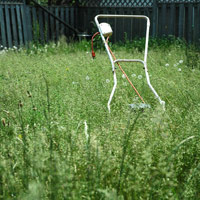
The Grass May Be Greener, But.......

Courtesy of http://www.ericleetroyer.com
Writers spend time (sometimes years), money (books, workshops,       conferences, etc.), sweat (typing away, hours and hours) and tears (from painful critique and rejections) trying to get published. In this day and age, a manuscript has to be practically perfect in grammar, spelling and all the variables (few adverbs, varying sentences, yadda yadda). Writers enter contests and receive helpful (or not) feedback, revise and send in to editors or agents, then play the waiting game.
Once a writer gets “The Call” (or “The Email” in this day of e-book publishing), and accept, they land on the “other side” of the fence. Is the grass greener on the side of being a published author? YES!  You bask in a Sally Field-esque glow (They like me! They really like me!) and accept congratulations from friends, supporters, family and colleagues. You realize (eventually) that you’ll soon see your name in print on a book cover (or an e-book), which is exciting beyond compare. All your hard work is finally over. Right?
Wrong.
The grass in the published “field” may be greener, but it grows *faster* -- whether your book is coming out from the “big six” in NYC or a small press. Promotion is now in the hands of the author. Long ago, a bad cover could tank your book sales but it was out of your hands. Your editor could orphan you—leaving your book waiting to fit into another editor’s schedule. Now plenty of authors are controlling their own cover art and editing their own books to leave the final edits easier to handle. But promotion is still key.
Promotion can range from free to a huge expense (RT ads, chapter excerpts bound with covers, on-line radio time, etc.). The new author has to make a lot of decisions – just how much can I afford? What kind of giveaways should I offer? Do I join a huge blogfest? Do I attend a conference or workshop and offer to present a topic, or spend the money on a professionally designed website, or two, or three?
And then there’s the next book, waiting to be written.
So yes, the grass is greener, but it needs a lot more mowing. The dog and cat might get fed, but dinner may be late getting to the table, the laundry forgotten in the dryer, the kitchen floor still sticky while you, the new published author, plot and plan to build your platform, entice readers with tweets, Facebook and blog updates, and write. Congratulations and best of luck!
You’re gonna need it.

Meg Mims is a freelance writer and author of Double Crossing, a historical romantic suspense coming out from Astraea Press in August of 2011. Are you a True Grit fan? Then check out Double Crossing, http://www.double-crossing.com


Wednesday, June 1, 2011

Writer Wednesday: Why Your Book Needs a Realtor


Why Your Book Needs a Realtor
By Kay Springsteen

This is it! You’ve decided to move. Maybe your house is too big, maybe it’s too small. Maybe you just want to live someplace else. Either way, you’ve decided you’re finished with the house you’re living in. It’s time to sell it. To do that, you have to put it on the market.
So let’s say you’ve been living in this house long enough to get comfortable. You’ve made a few improvements, tweaked a few things. Maybe you’ve put on an addition. And along the way, your kids have grown, so you’ve added growth charts with some cute little nicks in the woodwork of their bedroom doors. Nothing big, and it’s so cute and heartwarming, you just know the house’s next owners will want to preserve those marks forever like you were doing.
And, well, maybe getting in and out of the master bath is a bit awkward because the door sticks, but if you just give it a tiny kick, it opens just fine. Yes, those stains on the carpet are a tad unsightly, but—hey, it was New Year’s Eve of 2000 and Auntie Em thought the world was about to end when the clock struck midnight, so she was chugging the grape juice. And when the countdown ended and the neighbor shot off his gun…yeah, maybe that’s not as cute now that 2012 is approaching and Auntie Em likes prune juice.
So your house has some quirks that not every prospective owner is going to love…some might even hate them. What do you do? You clean it up. And since you have a hard time with destroying the evidence of some of your best memories, maybe an objective opinion is called for.
You wouldn’t consider selling your house without cleaning it up and having a third party (AKA your realtor) evaluate what you still need to do to show it off successfully, right?
So why would you consider doing anything less for that story you’ve been sweating over for the past several months or even years?
You’ve built your world, met your characters, introduced them to the world, added in a plot so they have tasks to accomplish. You’ve given then a voice and shown them participating in activities that lead to other activities. You’ve crafted a heart-stopping climax and finished with a breathtaking flourish. You’re ready to submit to a publisher and take that bow into the world of publication, right?
Wrong.
No one tells the perfect tale in a flawless fashion. We’re all human – more human than the characters we’ve created, actually. We’re bound to miss a period or a set of quotation marks. We probably have too many commas or a misplaced modifier. We may even…gasp! We might have a plot hole or two.
So, your story isn’t 100%. What do you do? You can send it in and risk rejection before the acquisitions editor reads past the second or third page. Or you can polish it.
Oh, you’ve already polished it? What about page 17, where your character said she hasn’t been home in 10 years, and then on page 24, she says she’s been away for 11 years?
It’s easy to miss the small details by being too close to the story you wrote. And it’s those small details the reader is going to notice and say, “Wait a minute!” 
So after you realize you’ve done as much as you can with the story, what do you do? You call a realtor. Or at least a critique partner or a group of them. You need someone to look over your work. Someone who will be able to look at what you’ve crafted with a…well, a critical eye. An objective party. Not the spouse, who will either joke your story’s foibles away or not get it. Not your best friend who will gush about your work because, well, you wrote a book!
You need someone with strong grammar and usage skills, someone who understands fiction and how it’s written. The best critique partners are other authors—this also gives you a chance to critique their work for them to return the favor. Trust me, every time you critique someone else’s work, you will learn also.
Now, I’ve developed a partnership of trust and fun with my critique partners. When they point things out, they’re not trying to undermine me or say my work stinks. They’re giving me insights that I can’t have about my work because I’ve been looking at these pages for so long I overlook things. They’re helping me improve and become a better writer.
But that doesn’t mean we don’t have fun at it. My Achilles heel is the difference between lay and lie. I even tried to teach myself to remember the difference by remembering that chickens lay and people lie. But I frequently miss it because it’s one of those things I grew up with: “The shirt was laying on the floor.” It’s a family colloquialism.
So, what do my crit partners do? They cluck-cluck like chickens whenever they find I’ve done this. We have fun with it because writing fiction, through all its processes, should be fun. Otherwise, why do it?
I trust my crit partners with my baby. I may or may not agree with everything they tell me, but the things they find are things at least I am made aware of. Sometimes, I don’t agree with them and yet I can see I’m not right either, and at such times, critique partners are great persons to brainstorm with. “Obviously plan A isn’t working, so what do you think might fix it?”
As a writer, you owe it to yourself and to the story you’ve been working so hard on, to include crit partners in the process. They are your first line of editing so you can present the most polished manuscript possible to the publisher. And believe me, if you can’t take what a trusted critique partner says without folding, you will have problems when your book goes into the publisher’s editing stage. A crit partner will help you polish your work for the editor to prepare for publication. An editor, on the other hand, has a job to do, and that is to spin your work into gold for your readers to enjoy to the fullest possible extent. The more polished your submission, the easier the process of editing will go.
If you need further convincing about the benefits of a critique partner, consider this personal story. Based on my tag line and brief synopsis, I was invited to a chat pitch with a major publishing house’s top editor. I became finger-tied (the equivalent of tongue-tied) and completely bombed the chat. However, this editor obviously sensed my nervousness, and she changed her question tactic. She asked if I had a critique partner or group, and I told her yes. She asked what they thought of the work, and I told her they liked it. She then asked me for a full submission directed to her attention. Why? She confided to me that my pitch was weak but the fact that I worked with critique partners showed a level of professionalism and dedication, and she knew the manuscript would be more polished than if I submitted it with just my own editing. Editors want the submission to be as polished as you can get it, too.
Critique partners can be found in various writing groups at http://groups.yahoo.com/ (http://groups.yahoo.com/group/RWCcritique/ is one; others can be found using the search function, http://groups.yahoo.com/search?query=romance+writing+critique) and at reviewfuse.com. Also, eharlequin.com has a forum in the community tab, where you can reach out to and connect with other writers.
Happy writing! If you want to learn more about polishing your manuscript to make it gleam, check out Kim Bowman’s blog, where she’s discussing how to format your manuscript for submission.

Friday, May 27, 2011

Feature Friday: Why Does Inga Like Clean Fiction

Welcome our first guest in the Feature Friday series on clean fiction at Astraea Press: Inga Kupp-Silberg. Find out more about her and why she always finds her way back to clean fiction.


Wednesday, May 25, 2011

Writer Wednesday: Brand Yourself by Jean Joachim


BRAND YOURSELF

            While I am no expert on social media, I do have over twenty years of marketing experience behind me. Not only direct marketing, which is selling direct to consumers, but I understand a bit about branding, too, from working for major ad agencies. We authors need to understand branding, because we are our own brands.
            

 Yes, you are a brand, a writer of a certain type of fiction, maybe even two types of fiction, like contemporary romance and paranormal romance, or historical romance and erotic romance. Whatever your genre or genres you represent something to the reader as sure as if you were Kraft Macaroni and Cheese or Windex. You are an author a reader can count on to be consistent, create a book she wants to read again and again and again. You should be counting on that, too. Because the biggest, hardest sell you’ll have is the first one. Once they read and like your book, they’ll come back to read everything you write. Don’t believe it? Look at Sue Grafton’s alphabet mysteries or Ed McBain or James Patterson who churn out mysteries like boxes of mac and cheese or Nora Roberts or Debbie Macomber. You’ll become a known quantity, dependable, important to a reader.
            The most important thing you can do is introduce a reader to your fiction. Here are a couple of ways to encourage that first purchase:
-          Cultivate the bargain shopper – some people will buy any book for $.99. They are only risking a buck. Run a short-term sale. I ran a sale, reducing the price of an ebook I self-published. I listed it on the big Kindle Fb page which reaches 800,000 people (Kindle Product news) more times than I was supposed to. Yes, I was harassed by a few Facebook Kindle site police who threatened to report me as spam. But I ran the sale for two days, promoted the heck out of the book, a sensual romance, and sold 80 books. I figure those 80 people will be willing to pay more for book two in the series.
-          Give readers a taste of your work for free. Another way to bring in readers is to blog. Show people what you can do with the written word. Put out free reads on your blog. Self-publish a free read on Kindle, then post about it everywhere you can. There is a blog that promotes romance writers called “Six Sentence Sunday”. The link is  http://sixsunday.blogspot.com/.  You sign up there. On Sunday people come to the blog to check out writers and click on your link to read your sample.
Post six sentences from a current book or work-in-progress plus a link back to the original six sentence blog. Include your blurb and buy links. I’ve had excellent traffic from this and as many as 24 comments on my post in one day. Try to find something controversial to post, not just idle description, something leaving them hanging or with a question, six intriguing sentences.  You want them to come back for more or buy the book to get more.
-          Get your name out in the world of writers and readers by joining forums and groups. Get to know people. Be nice. Ask questions not relating to your book. Give up the promotional you and just be you. People will like you and become interested in your books. Try yahoo groups, goodreads and kindle forums. All of these groups have romance reader and writer groups. I’ve sold a few books this way in very little time.
-          Get on Twitter. Although I can’t explain how this happened, traffic to my blog with 600 words from a new work-in-progress was limping along on my blog. I promoted it in the usual places to no effect. Then I wrote a tweet for a free read of the sequel to my current book. I posted the tweet not only to my followers but also as a reply to everyone I was following, or almost everyone. Within a matter of minutes I doubled my traffic on the site! I wish I could tell you why. I don’t know. I did it late at night. I tried it again the next day after two pm and got the same results.
            The point is to get your name and work out there. People will get to know you and love you. One of my most successful blogs is Confessions and Lies Wednesday. I can’t reveal where I get my stories, but some are funny and some are moving. The traffic on Wednesdays continues to grow as people become aware of the topic.
            Think of ways to brand yourself. Brainstorm with other writers or friends. Get your work known, get your name out there and you will sell books.

Thank you Jean for you insightful and informative post. To find out more about Jean's ideas and books check her out here.


Wednesday, May 11, 2011

Writer Wednesday: It's all about Voice and Vibe by Kim Bowman

V All You Can V
In the world of writing it’s sometimes impossible to know which rules and guidelines we should follow, which ones we should break.  It’s simple. All of them and all of them. One thing my experience as an editor and writer has taught me is that anything goes.
For instance, some of my fellow Astraea Press authors and I were recently discussing several well-known writers who head hop. With most publishing houses this is a big no-no. Yet these authors’ books are making the NYT best sellers list. Same with those evil words we’re not supposed to use such as to be verbs, words ending in -ly, the word “that”, etc. A number of famous writers constantly break these rules and no one is slapping them on the hand. So how do they do it? What’s their secret? 

It boils down to the V’s: VOICE and VIBE.
First and foremost you have to develop a voice as a writer. Voice is the way the author tells the story. It’s a specific style that is unique and expresses the writer’s interpretation of the story. Are you rolling your eyes thinking you’ve heard this before? Trust me when I tell you it’s one of the most valuable pieces of advice you’ll ever get.
In a recent post on Terry Odell’s blog (http://terryodell.blogspot.com/2011/03/what-was-that.html#more), she discussed using the word “was”. More specifically, she talked about how fiction writers aren’t supposed to use passive verbs. She listed several citations from both classic and current books to demonstrate how much of a staple the word “was” truly is even though the rules say avoid it.
The best example came from the opening paragraph of A Tale of Two Cities. I thought it would be interesting to rewrite it, taking out “was”. Here’s what I came up with:
            Good times and bad times abounded. On one side stood the wise. The other side, the foolish. You couldn’t tell the epoch of belief from the epoch of incredulity. The season of Light, the spring of hope, said we had everything before us, we were all going direct to Heaven. Yet, the season of Darkness, the winter of despair, proved we had nothing but the promise we would go direct the other way. In short, the more things change, the more they remained the same.
Not to toot my own horn, but not bad. At least not until you read Charles Dickens’ version:
It was the best of times, it was the worst of times, it was the age of wisdom, it was the age of foolishness, it was the epoch of belief, it was the epoch of incredulity, it was the season of Light, it was the season of Darkness, it was the spring of hope, it was the winter of despair, we had everything before us, we had nothing before us, we were all going direct to Heaven, we were all going direct the other way—in short, the period was so far like the present period, that some of its noisiest authorities insisted on its being received, for good or for evil, in the superlative degree of comparison only.
Some of you might argue that this is a classic, so of course we wouldn’t change it. But why is it a classic? What made Dickens special? Even now he’s considered a master of fiction, and I guarantee if A Tale of Two Cities was being published today most editors wouldn’t touch that opening. I wouldn’t. His voice stood out then just like it does now. I cried when I finished it and, twenty years later, my heart still aches when I think about Sydney Carton. Dickens’ writing elicited that kind of reaction from me. His voice was that strong and he gave me “the vibe”.
There’s an episode of Friends in which Joey is reading Louisa May Alcott’s Little Women. Joey goes to Rachel and Monica’s apartment crying because he’s just read the part where Beth dies. Rachel asks him if he wants to put the book in the freezer and he shakes his head yes. That’s how I want to feel when I read a book.
Some of you might be thinking, “Isn’t that the same thing as voice?” No, far from it. Vibe goes much deeper. Voice entertains our mind, while vibe caresses our heart. I remember the first time I experienced such a strong feeling with a book. I was in fourth grade and the book was Where the Red Fern Grows by Wilson Rawls. My emotions ran the gamut. Sad one minute, anxious the next. Angry, and then, finally, grief. While I loved the story, adored the characters, and could totally relate with a boy’s love for his dogs, it was more than that.
I care about my neighbor. We’re very close and she’s a part of our family. But when her dog died, I didn’t cry. I was sad for her, felt bad, but no tears. When Billie’s dogs Dan and Ann died in Where the Red Fern Grows, I was devastated and bawled like a baby. I literally felt as if I had lost a loved one. Same with Audrey Niffenegger’s Her Fearful Symmetry when the kitten died.
Sometimes vibe is better when seen through the eyes of a child. My two-year-old son came running into the house all excited the other day. He was babbling about something but the only words I understood were fast, daddy, bucket, tractor. Even at that, he had my full attention. Not because he’s my son, but because of his excitement, his passion.
The funny thing is, when my husband walked into the kitchen and I asked him what Cage was going on about, he said, “Oh, we took the tractor and a bucket to the end of the driveway and picked up some of the rocks in the yard.”
Pretty boring and uninteresting, right? Just a mundane, everyday task. But the way Cage told it, eyes wide and dancing with delight, little hands moving all over the place, grinning from ear to ear, I was totally enthralled to here, “Blah blah fast blah blah daddy blah blah bucket blah blah tractor.” He did more than just tell me what he had done. His words (VOICE) and his excitement (VIBE) painted a picture that engaged my senses.
How many times have you loved an author’s work, couldn’t wait to read the next book, and then something changes. The pros are great, the plot is wonderful, but you just don’t “feel” it. The author’s lost his luster, so to speak.
Voice is like riding a bicycle. Once you’ve figured it out, you’ve got it and you’ll never lose it. It becomes second nature. Vibe, on the other hand, is like riding a horse. You might not forget how it’s done, but you always have to think, react, and be on your toes. No putting the kickstand down and parking a horse for a year or two and then coming back to pick up where you left off. Horseback riding might be an ability you can master, but it’s definitely a constant learning experience that takes extreme dedication. We own five horses and they all have their own personalities, quirks, and flaws. I can ride them all, but I ride the one I enjoy and even that is challenging at times. Each book you write is unique in its characters, plot, setting, etc. Yet your voice remains the same, just like riding a bike. But your vibe must change, compromise, vary, and adjust with each new project, much like riding a horse.
Now, I’m in no way implying that an author’s voice is easy and anyone can do it. Voice takes skill, talent, and practice. Maybe riding a bike is second nature now, but was it when you started out? Didn’t you fall off quite a few times before you learned how to ride? But once you got it, you got it. Same with voice. It takes awhile to develop your style. You have a bunch of hits and misses along the way. But once you know how to write prose that work, where to end a chapter to make your reader want to keep turning the page, when and where to weave in back story, and how to balance showing with telling, it becomes ingrained in you. It’s a technique that you never forget.
Vibe, on the other hand, has to change to fit the story, yet must maintain the same power and impact that readers expect. It’s a daunting task, but the payoff is remarkable if you persevere.
When you put the two V's together, you get a variety that will keep readers coming back for more. The important thing is to practice, practice, practice, and V all you can V.

Also don't forget about....
The six of us have decided to throw a bash in honor of our wonderful book and the amazing cause it's going to help. And with a party comes PRIZES PRIZES PRIZES!!! So here's the scoop of prizes. We're running this hop until Saturday at midnight EST. We'll have 4 winners. Prizes will be as follows
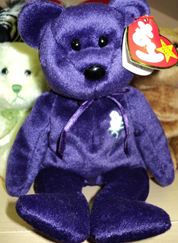
1st place be the Princess Diana beanie baby bear and an Astraea Press coupon code to use toward the purchase of any titles on the Astraea Press website, plus an ecopy of a book currently available by one of the six of us (winner's choice)
2nd place is a beautiful neclace and a paperback of my book Wayward Soul, plus an ecopy of a book currently available by one of the six of us (winner's choice)
3rd place is choice of 2 copies of ebooks currently offered by the six of us (winner's choice)
4th place is choice of 1 copy of ebook currently offered by the six of us (winner's choice)
Rules would be as follows:
Contestant must comment on all seven blogs to be eligible to win. This includes the Astraea Press Blog as well as the blogs of all six authors of the anthology. 
For every person you send to our blog hop (the person has to note your name in their post) you get another entry for prizes, same if you tweet and facebook (be sure to tell us you did). Please don't hesitate to let us know if you have questions:)


Thank was a great post Kim voice is so important and also requires writing again and again. To find out more about Kim click here.


Wednesday, May 4, 2011

Writer Wednesday: Cat and Mouse Writing by B G Lashbrooks

Cat and Mouse Writing


Have you ever watched a cat play with a mouse? The beast will circle its poor little prey, reach a paw out and tap the mouse on the head then pull back. It’ll circle again. Tap. Circle. Tap. Again and again and again.
I am the cat. My story is my prey.
Sounds so sinister and macabre, doesn’t it?
I don’t eat my prey when I’m done playing with it, (although the dog has eaten a few printed copies…) but the intensity that I approach my writing with is the same as that predatory cat’s.
Putting a scene in their head onto paper is one of the hardest things a writer can do. It’s one I put off as long as possible, too. I circle and circle around scenes, working over every angle in my head. Sometimes I tap the keyboard and put a few words or paragraphs or pages on the screen.
I don’t know how to say definitively where my ideas come from—it varies for each story or even each scene.
Beginning writers often spend a great majority of time searching for ideas, rather than putting the ideas they do have into words. It’s a form of procrastination borne from fear—if they don’t write it, then no one will read it and think it is bad. So they don’t write it. They offer the excuses of ‘I can’t find the right ideas!’ or ‘This has already been done!’ or ‘I have too many ideas and don’t know which one to use!’
But I can say one thing that may help a beginning writer overcome this hurdle—you will not ever be able to put the idea in your head into words well enough to say exactly what you want to express when the idea first hit you. Ideas are abstract, words on paper are much more concrete.
To get the scene written in a manner you’ll be pleased with you’re going to have to do some work.
First, forget the big picture. Work small. You can start with the general idea. Olivia’s Journey started with one line.
I knew my uncle would kill him if he saw him, so I hid him down in the barn on Jessup Mill’s farm…
I don’t fully know where this line came from—I was mostly asleep when it popped into my head. I sat up, wrote it down on a scrap sheet of paper, then went back to sleep with a head-full of questions such as ‘Who said this? Why would the uncle kill him? Where was Jessup Mill’s farm? Why was the barn empty?” All of these questions came from that quick little stream of consciousness idea that appeared virtually out of nowhere.
But these questions were enough to trigger other ideas which led to more lines which led to more questions. Which led to more and more of all of these things.
As I answered these questions, I just kept going. Kept writing. Beginning writers often fall into the trap of feeling each scene or chapter needs to be perfect before the next scene can be written. They spend so much time on editing and revising and wanting to ensure they get the scene just like that first original idea that they forget that there is more to a novel than those early scenes. They revise and revise and eventually lose interest in the work. Until they get to the point that they abandon the story.
So they never finish anything.
Many people say they want to write novels, but only a very small percentage actually manage to reach the last page. Most of these writers do so by not letting themselves edit until they do reach that point.
This is incredibly hard, but it works for many writers. Including me. It took me a while to realize this, but since I have, my writing productivity has changed drastically. I actually finish stories. And just like that cat after the mouse has met its inevitable demise, I am filled with an incredible sense of satisfaction once I reach that last page.
And then the real fun begins…revision.


 Wow great post BG! I love the ending then the fun begin's revision. Hate revision and edits so much! Anyway BG is the author of on of our new releases Olivia's Journey. You can see more about it down below.


  • Author: B.G. Lashbrooks
  • Genre: Historical, Romance, Young Adult
  • 190 Pages (PDF)
  • Cover Artist: Elaina Lee
  • ISBN: 978-1-936852-24-6 
It’s the Spring of 1865 and Mr. Lincoln runs the country...probably better than Olivia’s hard-fisted uncle runs his farm in Southern Indiana. Olivia would give anything to escape his abuse, but as long as he provides a shelter for her and her two younger sisters, she has no choice. But she soon has to make a daring decision when she finds a Confederate soldier bleeding alongside the river that borders her uncle’s farm. Soon Olivia and the soldier are running for their lives through Yankee country, with only Olivia’s twelve year old sister for company. But then the War is declared over and the President dead, what will that mean for the Confederate man who’d done so much to help Olivia? What will that mean for her?