Showing posts with label Writer Wednesday. Show all posts

Wednesday, July 6, 2011

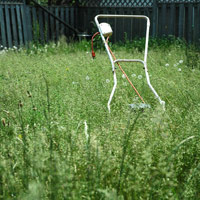
The Grass May Be Greener, But.......

Courtesy of http://www.ericleetroyer.com
Writers spend time (sometimes years), money (books, workshops,       conferences, etc.), sweat (typing away, hours and hours) and tears (from painful critique and rejections) trying to get published. In this day and age, a manuscript has to be practically perfect in grammar, spelling and all the variables (few adverbs, varying sentences, yadda yadda). Writers enter contests and receive helpful (or not) feedback, revise and send in to editors or agents, then play the waiting game.
Once a writer gets “The Call” (or “The Email” in this day of e-book publishing), and accept, they land on the “other side” of the fence. Is the grass greener on the side of being a published author? YES!  You bask in a Sally Field-esque glow (They like me! They really like me!) and accept congratulations from friends, supporters, family and colleagues. You realize (eventually) that you’ll soon see your name in print on a book cover (or an e-book), which is exciting beyond compare. All your hard work is finally over. Right?
Wrong.
The grass in the published “field” may be greener, but it grows *faster* -- whether your book is coming out from the “big six” in NYC or a small press. Promotion is now in the hands of the author. Long ago, a bad cover could tank your book sales but it was out of your hands. Your editor could orphan you—leaving your book waiting to fit into another editor’s schedule. Now plenty of authors are controlling their own cover art and editing their own books to leave the final edits easier to handle. But promotion is still key.
Promotion can range from free to a huge expense (RT ads, chapter excerpts bound with covers, on-line radio time, etc.). The new author has to make a lot of decisions – just how much can I afford? What kind of giveaways should I offer? Do I join a huge blogfest? Do I attend a conference or workshop and offer to present a topic, or spend the money on a professionally designed website, or two, or three?
And then there’s the next book, waiting to be written.
So yes, the grass is greener, but it needs a lot more mowing. The dog and cat might get fed, but dinner may be late getting to the table, the laundry forgotten in the dryer, the kitchen floor still sticky while you, the new published author, plot and plan to build your platform, entice readers with tweets, Facebook and blog updates, and write. Congratulations and best of luck!
You’re gonna need it.

Meg Mims is a freelance writer and author of Double Crossing, a historical romantic suspense coming out from Astraea Press in August of 2011. Are you a True Grit fan? Then check out Double Crossing, http://www.double-crossing.com


Tuesday, June 28, 2011

The Town Made the Characters


The Town Made the Characters
By Kay Springsteen

When I began Lifeline Echoes, I decided on the premise of the story first – a trapped individual and someone who had been his voice lifeline, keeping him hanging on. I knew the story would begin in one location and end in a completely different place. Once I settled on Los Angeles as the starting point, I went in search of the opposite end of the spectrum, Small Town, Anywhere, U.S.A. I could have chosen the Midwest, since I grew up in Michigan, but something screamed Cowboy to me, so I invented a small town at the foot of the Rocky Mountains in Wyoming. That’s how Orson’s Folly was born. But a small town needs people or it’s just a ghost town.

The stories that take place in Orson’s Folly (so far, Lifeline Echoes and Elusive Echoes), take the whole town to tell. While the primary focus in both stories is on the hero and heroine, like most people, they aren’t living in a bubble. They have interactions and these interactions push the story along. Main characters need to be made real. You may start with an idea, cut it into a paper doll, dress it, add layers until you have a plastic cutout, and then finally add the polish that makes the character alive. But it’s not enough to make real-life main characters. You have to make your secondary characters just as alive and just as believable—just as loveable and just as unlikeable.

So, I populated Orson’s Folly with some typical small town folks. But just putting these folks in place was the same thing as putting cardboard cutouts in Yankee Stadium instead of hiring extras for a baseball movie. They’re present but they do little to move the story along. Add a few “real” people into that crowd of cardboard and a soundtrack of stadium noise, and you get some motion in the stands to disguise the cutouts. Add a section of people seen in close-up talking, eating hotdogs, cheering when the hero hits a home run, and interacting with the hero in the form of perhaps getting an autograph, and you have a realistic backdrop to a scene that advances the story.

When Ryan returned to Orson’s Folly after being gone for over a decade and a half, the sheriff told him half the people thought he’d leave again and 49% were afraid he wouldn’t—and the sheriff was the 1% who would wait and see what happened. Bingo. My town’s residents now had relationships to my hero. Some liked him, some didn’t. Some figured he’d bail again, some hoped he would. From then on, every interaction shown between Ryan and the town “extras,” showed which side the extra was on, and gave an idea of Ryan’s place in the town. He may have returned, but he’d have to earn his standing again.

The key to building the layers of all the characters is to consider their relationships to one another. Parent/child, romantic interest, siblings, best friends before or now, competing athletes, casual acquaintances, former lovers, aggressor/victim, rivals, boss/employee, customer/clerk, caregiver/care receiver, law enforcement/criminal – these just to name the tip of the iceberg. Once I decided on the specific scenes my story was going to show, I populated the scenes with characters. For instance, when my heroine stopped for gas, I built layers on the cardboard cutouts of gas station attendant and other customers and had my heroine run into two gossiping townsfolk who stopped talking when she rounded a corner to find them there, giving the heroine a sort of edgy feeling and the knowledge that something was going on but it wasn’t for her ears., emphasizing that she was still an outsider in the town.

In Elusive Echoes, many of the same characters from the first story returned, and some got ramped up roles. The trick in this case was to build on any characterization already laid out in such a way that it didn’t contradict what had already been developed. There is a bit of leeway with secondary characters because they don’t have as many layers added into them as the well-fleshed out primary characters.

In Orson’s Folly, however, I have managed to build a system of several tiers of characters: the main characters, the supporting cast, and townspeople who are shown in various levels of interaction throughout both stories. The primary characters (Ryan and Sandy in Lifeline Echoes, and Sean and Mel in Elusive Echoes) are the main secondary characters in each other’s novels. All of these characters had to stay true to form while at the same time taking a backseat when not in their own story. But the secondary character of Justin McGee (Ryan and Sean’s father) is more like a secondary and a half character – not quite primary but definitely above secondary. Thus, it was a bit easier to keep him in his place as the glue of the McGee family through both stories. His relationship with his sons as well as with people in the town never changed.

The key to holding the characterizations true was to examine their relationships to each other and use these relationships as a sort of keystone. Ryan was the big brother who left and returned years later as the Prodigal Son. Sean was the kid who’d been left behind, who had moved into taking on the responsibility for running the ranch when their father had to step back some. He had a hard tome relinquishing the role of responsibility when his brother returned, and they were still doing a push-pull a year and a half later when the story became Sean’s to tell.

But I think sibling or parent/child relationships are fairly easy as long as you know the family history. How can other secondary relationships be utilized to move a story? The power of a decades’ old grudge can create hatred that festers and malevolence can grow to such a degree that family feuds are born. Or take the triangle. These are often seen in romance, but what if the writer takes a triangle and twists it so that it’s not a romantic triangle but a triangle between the love of the heroine’s life and someone to whom she gave life? Different kinds of love but equal in intensity – and then she must choose between the two.

In order to add the final layer to a character, the one that makes the character stand up and say “notice me, I’m real,” the writer must take into account the character’s relationships with others. Thus, the town of Orson’s Folly, or rather relationships with its inhabitants, is what put the polish on the characters that started out as cardboard cutout ideas.

To find out more about twisted triangles of love . . . I invite you to pick up a copy of Elusive Echoes


Wednesday, May 18, 2011

Writer Wednesday: Six Steps To Sanity Every Author Needs To Know

Every writer goes through ups and downs, but I find that during those down times we are able to further refine our craft and learn about ourselves the most.Thus the reason I have come up with the six steps to sanity when writing is making you crazy, or as I like to put it six steps to sanity when writing makes you want to bang your head against the wall and cry. 

As a part time counselor I can honestly say that I have built my life around “steps” to sanity for my kids at school as well as for myself when I’m writing. In fact I’m a huge fan of lists just because it gives me a reference point, so in honor of counseling and writing I have put together a no fail list on how to stay sane.


Number 6: Laugh at yourself. Some say that laughter is the closest you will ever get to insanity. I am a firm believer that every single human being flirts with a very thin line when it comes to being sane and insane. Have you ever laughed so hard you cried? Or maybe you’re the type of person that laughs by yourself then gets really self conscious because there’s nobody there to watch you? Or how about this, you’re having a rough day, you see the Starbucks sign and immediately feel a little laugh tear come to your eyes because, yes the green sign is on and yes Starbucks is in fact open and what’s that? Oh they know your name! Yes…Laughter, it heals all, and it’s good for the soul. Plus I have it on good authority that it helps you burn more calories. Well laughing and kissing are actually tied, but it’s probably not socially acceptable to go around kissing everyone you see…or maybe it is. Check back with me later.

Number 5: Eat. This one is actually quite simple. The first thing I do when I get emotional is count back to the last time I ate. As a writer its super easy to get so immersed in your story that you actually forget to feed your body. The opposite is also true; to overindulge on Krispy Kreme donuts because you’re story isn’t turning out how you want it to. Food is fuel. If you have no fuel you aren’t going to be writing your best and if you have the wrong fuel you might fall asleep at your computer with jelly donut on your face. And nobody wants to see that. That’s just sad. Eating carbohydrates is the easiest and quickest way to alleviate anxiety and depression as long as you control the urge to finish the entre loaf of bread or box of cookies.

Number 4: Don’t be OCD. This is like asking many authors not to breathe. I get that, trust me I really get that. Many of us obsess over our stories to where we actually end up believing the characters are real. Case in point after watching a few episodes of your favorite TV show you wake up in the middle of the night concerned over the shows main characters and if they will or will not end up together. Don’t laugh you know you’ve done it, we all have. You’re characters are real to you yes, and they are important, but don’t’ get so obsessed with them that you lose touch with reality. If this is something you’re not sure you struggle with then do a little test. If you find yourself in tears over what’s happening in your story more than five times a day, you need to back off, or if you go consume an entire box of ice cream because your main character dumped his girlfriend, yes you are too emotionally involved. Put the ice cream down and walk away. The point is, we all get obsessed, know your limits and know when it’s time to take a breather. Some of the best stories are the ones that are written without being re-read and edited. I know some of my best writing moments have been the times I wasn’t planning on writing anything spectacular.

Number 3: Take a compliment, especially when it’s deserved. It has been ingrained in our brains since childhood to never, ever take compliments. Society tells us that if we take a compliment and say thank you that we are in fact being conceited. Women are the worst at this. Someone compliments us and immediately the first thing we do is either downplay the compliment or give a compliment back to the person who just showered us with praise. I am here to say it’s okay to be great. It’s okay to be awesome. If someone says you’re a good writer, give yourself a high five and let it make your day! Don’t sit there and make excuses about the person giving the compliment, “oh they’re just being nice,” or “they must have read my book after drinking too much wine.” STOP! Let yourself be wonderful! If you are published you are published for a reason. Don’t hide your light just because you feel like you don’t deserve to shine.

Number 2: Write through it. We all get writers block and most of the time when we do get writers block we get really hard on ourselves. It’s normal to get it and its even more normal to get stuck in it because you start stressing yourself out. Think of writing as a running. You have a goal you want to reach as long as you keep running you’ll reach it. The same goes for writing, keep your goal in mind and just keep writing even if it’s one or two sentences, eventually you will go faster and you will reach your goal in time.

Number 1: Surround yourself with positive people. Nothing brings me down more than a negative person. Negative people are like leeches they suck all the life and happiness out of you especially if you are a happy person. Happy people can’t help but give off happy vibes meaning sometimes they attract negative people who need happy people to make them feel better about themselves. When you are writing you are very vulnerable because writing is a very personal thing. Make sure that those who critique your work are not people that are looking for ways to put you down. We become who we surround ourselves with so if you don’t like the company you keep sooner or later you won’t like your own reflection.  Humans are social creatures; we feed off of other people’s energy. One thing I’ve noticed about Astraea press authors is how positive and encouraging they are to one another. Never take that for granted. Hold on to it and let it rub off on you so you can in turn be an encouragement to other people.

And there you have it, my six steps to sanity. Very practical, some very elementary, but useful nonetheless in helping you on your journey to writing!


Amanda turned down Preston's prom invitation in front of her entire high school, but that was eight years ago.
Somehow, her past mistakes always have a way of catching up with her, and making her pay. Amanda's sarcastic wit mixed with Preston's insufferable ego make sparks fly in more than one way.
Preston, against his better judgment can't fight the desire to get under Amanda's skin and mercilessly tease her, but when that teasing becomes flirting, and flirting becomes something dangerously more, neither of them are prepared for the adventure that follows.


Thank you Rachel for sharing those tips for sanity. I think these can apply to other areas as well.  Now check out Rachel Van Dyken's debut novel, Every Girl Does It,  with Astraea Press releasing soon.


Wednesday, May 11, 2011

Writer Wednesday: It's all about Voice and Vibe by Kim Bowman

V All You Can V
In the world of writing it’s sometimes impossible to know which rules and guidelines we should follow, which ones we should break.  It’s simple. All of them and all of them. One thing my experience as an editor and writer has taught me is that anything goes.
For instance, some of my fellow Astraea Press authors and I were recently discussing several well-known writers who head hop. With most publishing houses this is a big no-no. Yet these authors’ books are making the NYT best sellers list. Same with those evil words we’re not supposed to use such as to be verbs, words ending in -ly, the word “that”, etc. A number of famous writers constantly break these rules and no one is slapping them on the hand. So how do they do it? What’s their secret? 

It boils down to the V’s: VOICE and VIBE.
First and foremost you have to develop a voice as a writer. Voice is the way the author tells the story. It’s a specific style that is unique and expresses the writer’s interpretation of the story. Are you rolling your eyes thinking you’ve heard this before? Trust me when I tell you it’s one of the most valuable pieces of advice you’ll ever get.
In a recent post on Terry Odell’s blog (http://terryodell.blogspot.com/2011/03/what-was-that.html#more), she discussed using the word “was”. More specifically, she talked about how fiction writers aren’t supposed to use passive verbs. She listed several citations from both classic and current books to demonstrate how much of a staple the word “was” truly is even though the rules say avoid it.
The best example came from the opening paragraph of A Tale of Two Cities. I thought it would be interesting to rewrite it, taking out “was”. Here’s what I came up with:
            Good times and bad times abounded. On one side stood the wise. The other side, the foolish. You couldn’t tell the epoch of belief from the epoch of incredulity. The season of Light, the spring of hope, said we had everything before us, we were all going direct to Heaven. Yet, the season of Darkness, the winter of despair, proved we had nothing but the promise we would go direct the other way. In short, the more things change, the more they remained the same.
Not to toot my own horn, but not bad. At least not until you read Charles Dickens’ version:
It was the best of times, it was the worst of times, it was the age of wisdom, it was the age of foolishness, it was the epoch of belief, it was the epoch of incredulity, it was the season of Light, it was the season of Darkness, it was the spring of hope, it was the winter of despair, we had everything before us, we had nothing before us, we were all going direct to Heaven, we were all going direct the other way—in short, the period was so far like the present period, that some of its noisiest authorities insisted on its being received, for good or for evil, in the superlative degree of comparison only.
Some of you might argue that this is a classic, so of course we wouldn’t change it. But why is it a classic? What made Dickens special? Even now he’s considered a master of fiction, and I guarantee if A Tale of Two Cities was being published today most editors wouldn’t touch that opening. I wouldn’t. His voice stood out then just like it does now. I cried when I finished it and, twenty years later, my heart still aches when I think about Sydney Carton. Dickens’ writing elicited that kind of reaction from me. His voice was that strong and he gave me “the vibe”.
There’s an episode of Friends in which Joey is reading Louisa May Alcott’s Little Women. Joey goes to Rachel and Monica’s apartment crying because he’s just read the part where Beth dies. Rachel asks him if he wants to put the book in the freezer and he shakes his head yes. That’s how I want to feel when I read a book.
Some of you might be thinking, “Isn’t that the same thing as voice?” No, far from it. Vibe goes much deeper. Voice entertains our mind, while vibe caresses our heart. I remember the first time I experienced such a strong feeling with a book. I was in fourth grade and the book was Where the Red Fern Grows by Wilson Rawls. My emotions ran the gamut. Sad one minute, anxious the next. Angry, and then, finally, grief. While I loved the story, adored the characters, and could totally relate with a boy’s love for his dogs, it was more than that.
I care about my neighbor. We’re very close and she’s a part of our family. But when her dog died, I didn’t cry. I was sad for her, felt bad, but no tears. When Billie’s dogs Dan and Ann died in Where the Red Fern Grows, I was devastated and bawled like a baby. I literally felt as if I had lost a loved one. Same with Audrey Niffenegger’s Her Fearful Symmetry when the kitten died.
Sometimes vibe is better when seen through the eyes of a child. My two-year-old son came running into the house all excited the other day. He was babbling about something but the only words I understood were fast, daddy, bucket, tractor. Even at that, he had my full attention. Not because he’s my son, but because of his excitement, his passion.
The funny thing is, when my husband walked into the kitchen and I asked him what Cage was going on about, he said, “Oh, we took the tractor and a bucket to the end of the driveway and picked up some of the rocks in the yard.”
Pretty boring and uninteresting, right? Just a mundane, everyday task. But the way Cage told it, eyes wide and dancing with delight, little hands moving all over the place, grinning from ear to ear, I was totally enthralled to here, “Blah blah fast blah blah daddy blah blah bucket blah blah tractor.” He did more than just tell me what he had done. His words (VOICE) and his excitement (VIBE) painted a picture that engaged my senses.
How many times have you loved an author’s work, couldn’t wait to read the next book, and then something changes. The pros are great, the plot is wonderful, but you just don’t “feel” it. The author’s lost his luster, so to speak.
Voice is like riding a bicycle. Once you’ve figured it out, you’ve got it and you’ll never lose it. It becomes second nature. Vibe, on the other hand, is like riding a horse. You might not forget how it’s done, but you always have to think, react, and be on your toes. No putting the kickstand down and parking a horse for a year or two and then coming back to pick up where you left off. Horseback riding might be an ability you can master, but it’s definitely a constant learning experience that takes extreme dedication. We own five horses and they all have their own personalities, quirks, and flaws. I can ride them all, but I ride the one I enjoy and even that is challenging at times. Each book you write is unique in its characters, plot, setting, etc. Yet your voice remains the same, just like riding a bike. But your vibe must change, compromise, vary, and adjust with each new project, much like riding a horse.
Now, I’m in no way implying that an author’s voice is easy and anyone can do it. Voice takes skill, talent, and practice. Maybe riding a bike is second nature now, but was it when you started out? Didn’t you fall off quite a few times before you learned how to ride? But once you got it, you got it. Same with voice. It takes awhile to develop your style. You have a bunch of hits and misses along the way. But once you know how to write prose that work, where to end a chapter to make your reader want to keep turning the page, when and where to weave in back story, and how to balance showing with telling, it becomes ingrained in you. It’s a technique that you never forget.
Vibe, on the other hand, has to change to fit the story, yet must maintain the same power and impact that readers expect. It’s a daunting task, but the payoff is remarkable if you persevere.
When you put the two V's together, you get a variety that will keep readers coming back for more. The important thing is to practice, practice, practice, and V all you can V.

Also don't forget about....
The six of us have decided to throw a bash in honor of our wonderful book and the amazing cause it's going to help. And with a party comes PRIZES PRIZES PRIZES!!! So here's the scoop of prizes. We're running this hop until Saturday at midnight EST. We'll have 4 winners. Prizes will be as follows
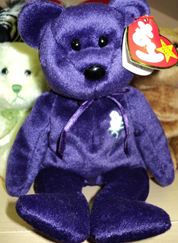
1st place be the Princess Diana beanie baby bear and an Astraea Press coupon code to use toward the purchase of any titles on the Astraea Press website, plus an ecopy of a book currently available by one of the six of us (winner's choice)
2nd place is a beautiful neclace and a paperback of my book Wayward Soul, plus an ecopy of a book currently available by one of the six of us (winner's choice)
3rd place is choice of 2 copies of ebooks currently offered by the six of us (winner's choice)
4th place is choice of 1 copy of ebook currently offered by the six of us (winner's choice)
Rules would be as follows:
Contestant must comment on all seven blogs to be eligible to win. This includes the Astraea Press Blog as well as the blogs of all six authors of the anthology. 
For every person you send to our blog hop (the person has to note your name in their post) you get another entry for prizes, same if you tweet and facebook (be sure to tell us you did). Please don't hesitate to let us know if you have questions:)


Thank was a great post Kim voice is so important and also requires writing again and again. To find out more about Kim click here.


Wednesday, April 6, 2011

Writer Wednesday: A Somewhat Magical Formula

It's Writer Wednesday here at Astraea Press and we are pleased to have Therese Gilardi guest posting about becoming published and the magic powers she employs for those endeavors. Take it over Therese...


A Somewhat Magical Formula

            Whenever people find out I’m a published writer they inevitably want to know how I managed to land my poems, prose and essays between the covers of numerous magazines, journals and book covers. Even those who disdain reading are curious. To some, becoming a published writer is a twenty-first century parlor trick, requiring some sort of sleight of hand or at least a lot of luck. Writers and non-writers alike insist there must be a secret handshake, or perhaps a how-to manual not available to the general public. I understand this mentality, for that’s how I thought when I first set pen to paper.
            Back in the day (that would be 2002), sending out queries meant that the writer had to spend hours pouring over publishers’ guidelines that were often out-dated by the time they hit bookstore and library shelves. These guidelines directed the writer where to send a cover letter, writing sample and the all-important SASE (self-addressed stamped envelope). Hours were spent crafting submission packets, which then had to be carted to and from the post office. Submitting a poem or short story was a labor intensive and often costly undertaking that required the patience of Job, since it was not at all unusual to hear of response times upwards of eighteen months. Ah, the good old days.
            I don’t think so. For, while today’s e-publishing marketplace does bring with it the peril of online piracy and the depressing demise of the brick-and-mortar bookstore, it also heralds a time of great opportunity for the writer. Online publishers’ guidelines make it a snap to find out where to submit that essay on the eating habits of iguanas or that short story about a talking baseball bat. The ability to contact potential publishers from any place with an Internet connection means far less time is spent going about the tedious task of formulating submissions packets, which frees up far more time for the writer to spend on developing her craft.  E-submissions equal less paper waste, generally much shorter response times and a more egalitarian process, since the cost of postage is no longer a barrier driving writers of lesser economic means from the marketplace.
            Since 2002 my work has appeared in print and online. There are advantages and disadvantages to both formats. While I’m convinced that there is still no perfect method for ensuring that a piece of work will ultimately reach the marketplace, I’m convinced that e-publishing has allowed many more writers to hone their craft and submit their work for consideration. Ultimately this means that far more writers are able to see their words in print. Which sounds to me like a pretty magical formula for success.

"What do you like best about e-publishing? What, if any, changes would you make to the e-publishing format?"
To Therese or find out more about her...click her name.

Wednesday, March 30, 2011

Writer Wednesday: Seduced by Ebooks: A Love Affair

Being seduced by e-books
 
I have  always been excited by e-books and their possibilities.  I remember reading in high school about new technology (CDs) that would allow the complete works of Shakespeare to be put on one disk.  I thought this was fantastic.  I would no longer need shelves and shelves for my books.  I could keep them all on these tiny discs.
 
But reading on a computer screen wasn’t all it was cracked up to be. Then the first e-readers came out. Better, but they were really expensive.  I never got to try one. 
 
Since then e-reader technology has advanced and become affordable and the practicality of e-books is becoming more apparent. When they first came out, I was fascinated by the idea that I wouldn’t have to decide which books to take on vacation and worry about what to do should I finish all of them.  With an e-book reader, I could take a thousand books. Problem solved.